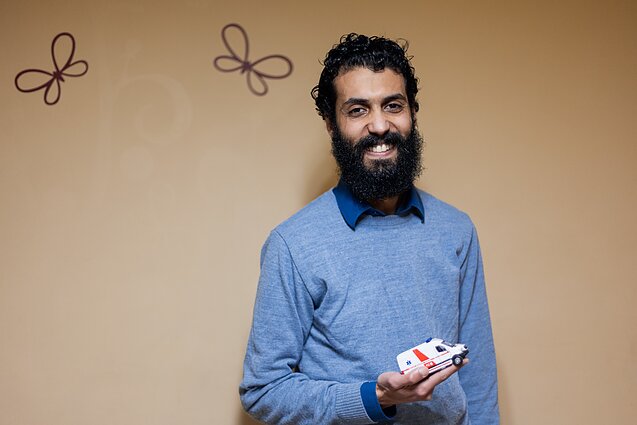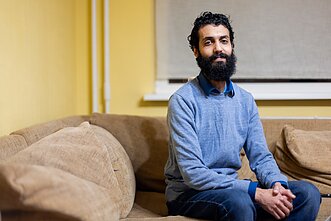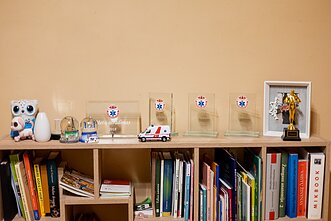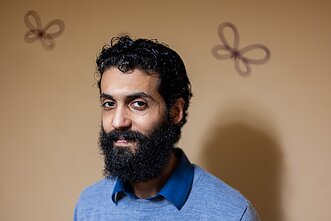

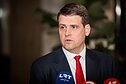

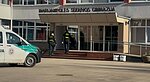





“I tell my colleagues: You gave me a chance, you believed in me, so now, you won’t get rid of me’,” says Moroccan Abderrahmane Bouboual, who arrived in Lithuania almost seven years ago. He now works at an ambulance station in Panevėžys, Lithuania’s fifth largest city, speaks perfect Lithuanian, and says he has no plans to leave.
It was November when Bouboual first came to Lithuania. He says he was immediately overwhelmed by the cold here.
“My Moroccan jacket was not warm enough. In Vilnius, while waiting for the bus to Panevėžys, I kept running to the shop to warm up,” he remembers. However, he is now used to the local climate and feels like a local.
Work and studies
Bouboual balances his work in Panevėžys and residency training in abdominal surgery in Vilnius.
“It’s exciting to work in the ambulance station because it’s all about making the right decision at the right time. Of course, this is a big responsibility,” he admits.
Bouboual studied medicine in Rabat, Morocco, where he also had internships in several hospitals, including a military hospital.
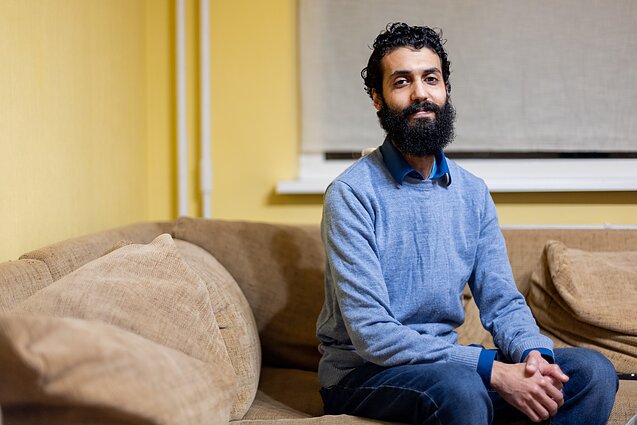
In Morocco, Bouboual could have started his career as a general practitioner immediately after seven years of medical studies. In Lithuania, his choices were narrowed to working at a reception or an ambulance station. He found it more useful to gain experience in emergency medicine.
The Moroccan admits that he was worried before going to a job interview in Panevėžys.
“But we had a warm conversation. I’m very grateful for this opportunity. The work is interesting, every call is different,” he shares.
In his words, he will never forget his second call. That time, he and his colleagues went to help a man in cardiac arrest.
“It was the first time I had to resuscitate a person. [...] Theoretically, I knew how to do everything, but practically... I was very lucky to have an experienced colleague next to me. So, everything worked out well for us,” Bouboual shares.
Now, the Morrocan has six years of experience in emergency medicine and sometimes shares it with his younger colleagues.
According to the man, people in Lithuania most often suffer from cardiovascular diseases, while in Morocco, infectious diseases are more common.
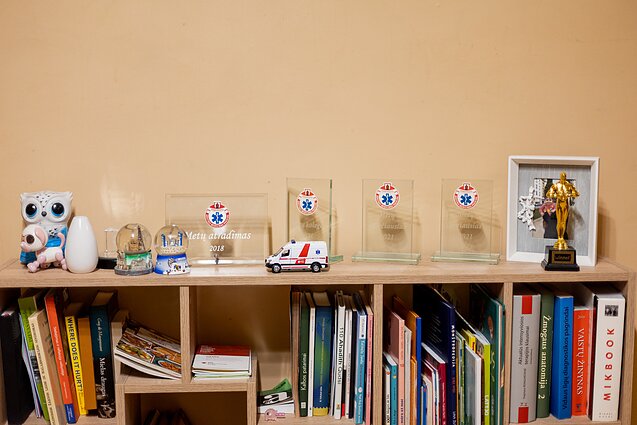
He says Lithuanians react to the foreign doctor with interest and often try to guess where he comes from. Colleagues in Panevėžys also call him Abde, as his full name – Abderrahmane – is too difficult to pronounce for Lithuanians.
The Moroccan started learning Lithuanian as soon as he arrived in the country. He first attended Lithuanian language classes at the Faculty of Philology at Vilnius University.
“It was difficult [...]. But what helped me the most was working at the Panevėžys ambulance station. Here, everyone spoke Lithuanian, so I had no other choice but to learn the language,” he says.
Childhood dream
Bouboual says he dreamt of becoming a doctor since childhood. His parents, a biology and geology teacher and a housewife, supported his desire.
“I started dreaming of becoming a doctor in first grade. I remember going to the ophthalmologist, looking at the machines, and realising that I wanted to treat people,” he says.
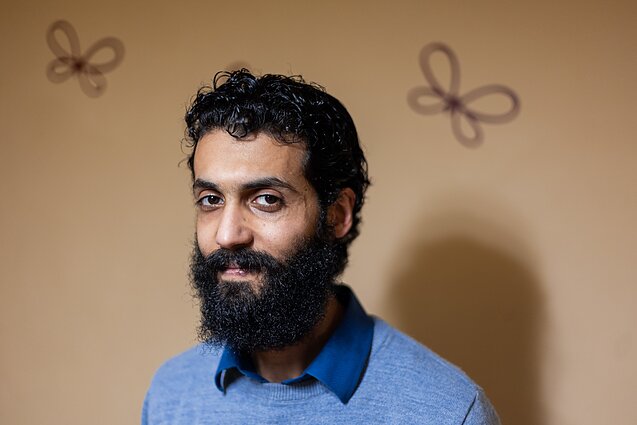
In his words, he screamed with joy when he found out that he passed the entrance exams and was going to become a doctor.
“In Morocco, to study medicine, one must graduate from a gymnasium that teaches experimental sciences. The main subjects are biology, physics, chemistry, and mathematics,” he explains.
Next year, Bouboual is due to finish his residency in Vilnius but says he sees his future in Panevėžys, where he wants to continue working at the ambulance station. Eventually, he would like to work in the surgical department of Panevėžys Hospital.
Surprising food
In Lithuania, Bouboual had to get used not only to the cold but also to different food. He says he was most surprised by šaltibarščiai, cold beetroot soup, as he expected it to be sweet because of its pink colour.
“The colour had nothing to do with the taste. I thought it would be sweet, like pink candy. When I tasted it, I was surprised. But I really liked it. I tried to make šaltibarščiai for my relatives in Morocco, but I messed it up because we don’t have kefir, and I used milk. Nobody ate it,” the man smiles.
In Lithuania, he also started eating less bread and potatoes: “It’s often said that Lithuanians eat a lot of potatoes. Compared to Morocco, you eat less.”

Newsletter
Every Friday morning.